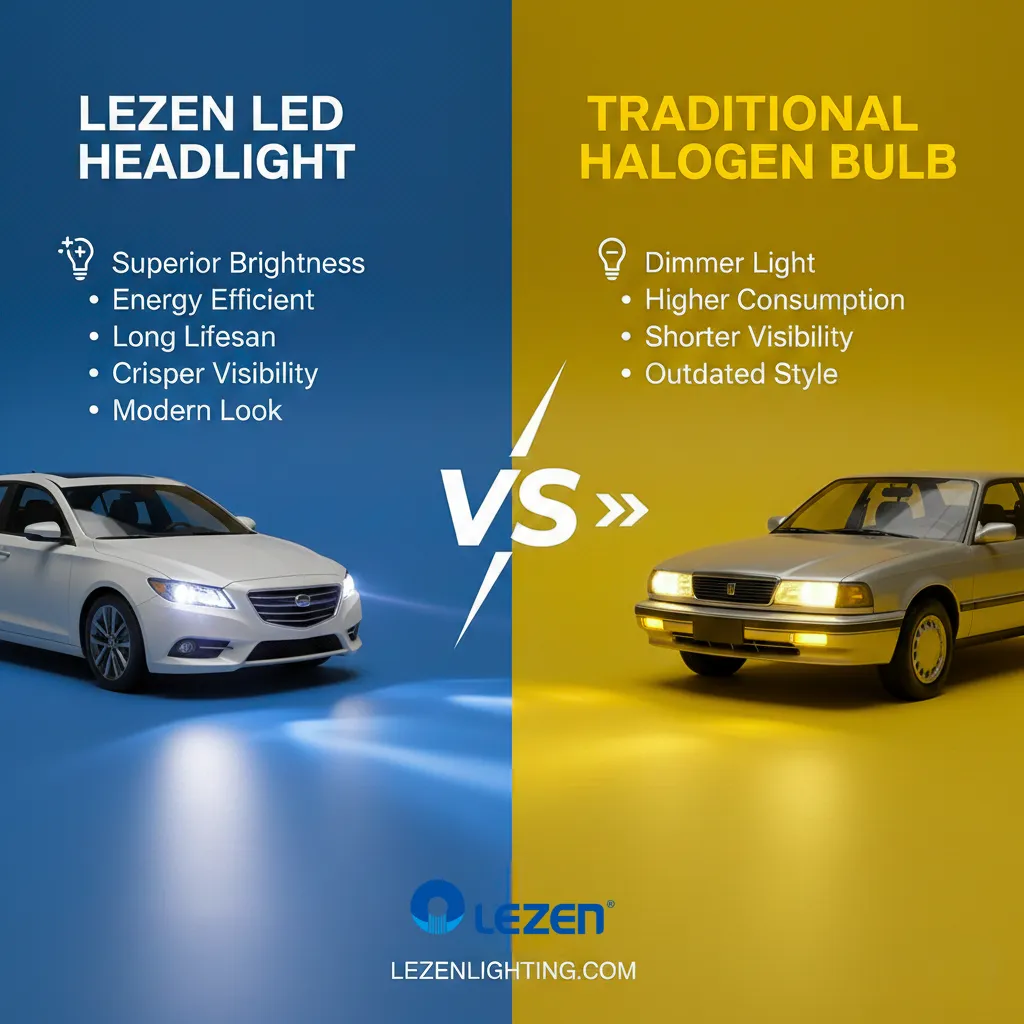
In the competitive automotive aftermarket, staying ahead means understanding not just the technology, but the regulatory and economic factors that drive profitability. This guide explores the critical transition from halogen to LED.
What is LED Headlight?
LED headlights are advanced lighting systems that utilize light-emitting diodes to produce bright and energy-efficient illumination for vehicles. They are known for their long-lasting performance, reduced power consumption, and enhanced visibility during night driving.
Core Technology: LED headlights use semiconductors to emit light when an electrical current passes through them.
B2B Edge: Modern LED series (like all our led headlight ,such as V5 or M38/L19) use 1:1 chip positioning to mimic halogen light patterns, significantly reducing the “glare” issues that led to past legal restrictions.
Construction: Compact design with multiple diodes arranged for optimal light distribution.
Energy Efficiency: Consumes less power compared to traditional bulbs, reducing vehicle energy usage.
https://www.youtube.com/watch?v=937mA_U5170%5D
What is Car Halogen Bulb?
Car halogen bulbs are traditional lighting systems that use a tungsten filament enclosed in a halogen gas-filled glass capsule. They are widely used due to their affordability and ease of replacement, providing sufficient illumination for most driving conditions.
Core Technology: Operates by heating a tungsten filament to produce light.
Construction: Glass bulb filled with halogen gas to extend filament life.
Brightness: Offers decent brightness levels but less intense than LED.
Status in 2026: While being phased out in high-end markets, they remain a “commodity” staple for low-budget maintenance and specific legacy vehicle fleets.
Key Differences: LED Headlight vs. Car Halogen Bulb
| Feature | Car Halogen Bulb | LED Headlight |
|---|---|---|
| Brightness | 1,000 – 1,500 lumens | 6,000 – 12,000+ lumens |
| Energy Efficiency | Wastes 80% of energy as heat,low power consumption | 80-90% of energy,high power consumption |
| Lifespan | 500 – 1,000 hours | 30,000 – 50,000+ hours |
| Cost | $1-$5 | $15-$60 |
| certificate | Emark R37 /DOT | EMARK R37 H11, No other updates were made. |
Brightness & Visibility
- Halogen: Average output of 1,000 – 1,500 lumens. Light is often “warm yellow” (3000K).
- LED: Can achieve 6,000 – 12,000+ lumens. The “cool white” (6000K-6500K) light mimics daylight, which road safety studies suggest can reduce driver fatigue by up to 25%.
- Data Source: National Highway Traffic Safety Administration (NHTSA) – Lighting Visibility
Lifespan
- Halogen: 500 – 1,000 hours. Frequent replacement is required.
- LED: 30,000 – 50,000+ hours. For a B2B distributor, this means significantly lower RMA (returns) and higher customer trust.
Energy Efficiency & Heat
- Halogen: Wastes 80% of energy as heat. Operating temperatures can exceed 200°C.
- LED: Converts 80-90% of energy into light. While the diodes stay cool, the electronics require heat sinks or fans (like the Lezen L19 series) to manage rear-end heat.
- Data Source: U.S. Department of Energy – LED Efficiency
Cost & Maintenance
- Initial Cost: Halogen is cheaper per unit ($1-$5), but LED ($15-$60) offers higher Average Order Value (AOV) for wholesalers.
- Maintenance: LED is virtually “fit and forget,” reducing long-term labor costs for fleet managers.
Replacement (Plug & Play)
Modern LED designs (1:1 mini size) have resolved the “bulky driver” issues of the past, making them a direct replacement for H1, H4, H7, and H11 halogen sockets without modifications.
Regulatory Compliance & The “Illegal” Reason
This is the most critical section for B2B buyers. In many regions (US, EU), LED retrofits (putting an LED bulb into a halogen housing) are technically prohibited for street use.
The Scientific Reason: Halogen reflectors are designed for a 360° cylindrical filament. If an LED’s light source is even 0.1mm out of alignment, it scatters light, creating Glare that blinds oncoming drivers.
- Legal Basis (USA): FMVSS 108 requires specific beam patterns that most aftermarket LEDs cannot meet without the original housing.
- Legal Basis (EU): ECE R37 defines filament lamps. Since LEDs have no filament, they are technically non-compliant unless they have specific model-based approval.
- Data Source: UNECE Regulation No. 37 & 128
Conclusion
LED headlights provide superior performance in terms of brightness and energy efficiency, making them an excellent choice for drivers seeking improved visibility and longevity. However, car halogen bulbs remain a viable option for budget-conscious individuals due to their lower upfront costs.
FAQ
1. Is it okay to replace halogen with LED in a car?
Yes, replacing halogen bulbs with LED headlights can enhance brightness and energy efficiency, but ensure compatibility with your vehicle’s electrical system.
2. Do LED headlights last longer than halogen bulbs?
Yes, LED headlights typically have a longer lifespan compared to halogen bulbs.
3. Are LED headlights more expensive than halogen bulbs?
Yes, LED headlights generally have a higher initial cost but offer savings in energy and replacement over time.